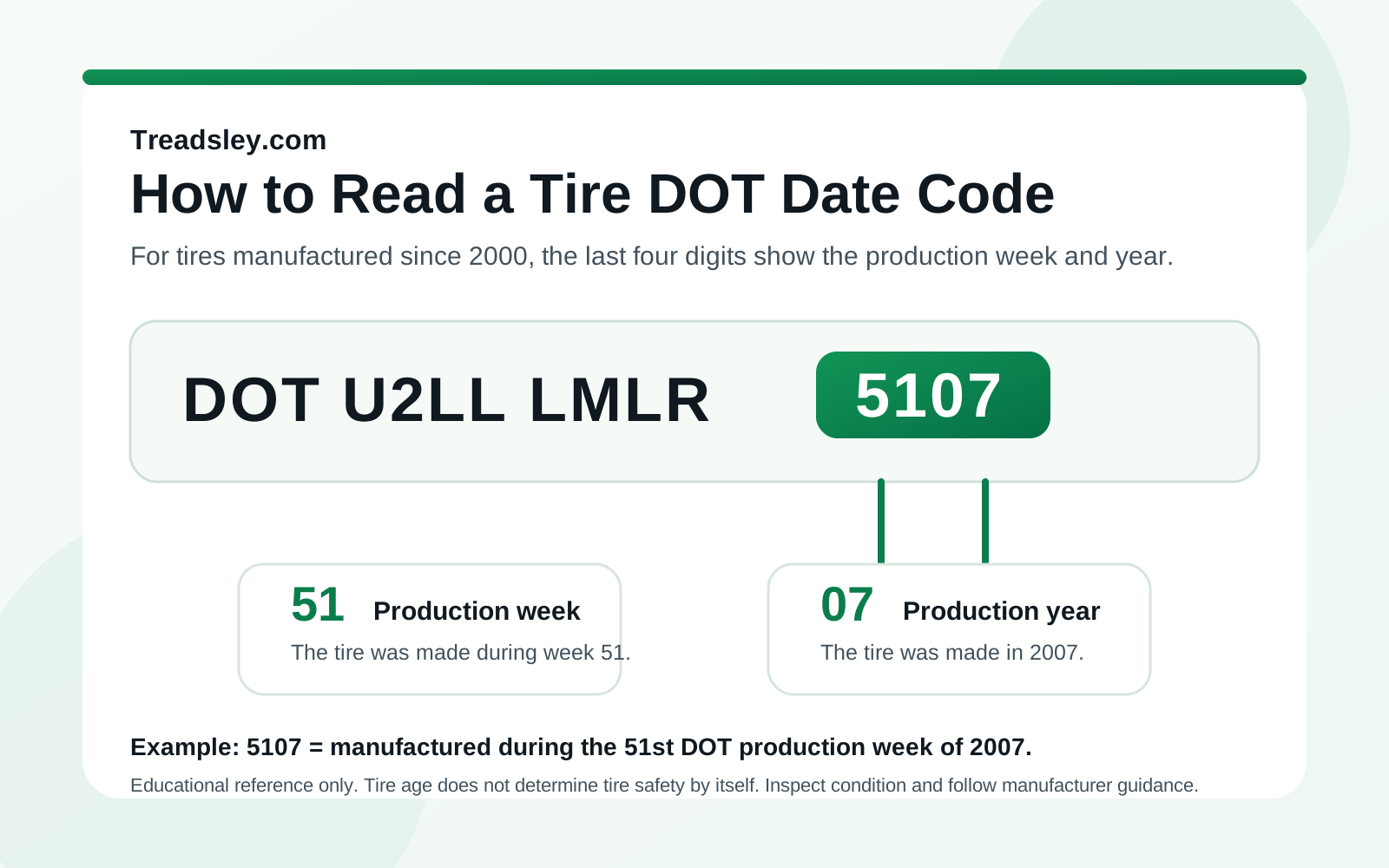
The first two digits identify the production week.


How to Read a Tire DOT Date Code
Learn where the DOT Tire Identification Number is located, what the last four digits mean, why the full code may only be on one sidewall, and how to check when a tire was made.
Quick Summary
The DOT Tire Identification Number, often called the tire DOT code, is molded into the tire sidewall. For tires manufactured since 2000, the last four digits identify the week and year the tire was produced.
Example: 5107 means the tire was manufactured during the 51st DOT production week of 2007. The code tells you when the tire was made. It does not, by itself, determine whether the tire is safe to use.
Check your tire's age
Already found the code? Use the Treadsley Tire Age Checker to decode the date, estimate age, and identify the plant when the full DOT code includes a known plant code.
What is a tire DOT code?
The DOT Tire Identification Number is a required tire sidewall marking used to identify the tire for manufacturing and traceability purposes. It begins with the letters DOT, followed by plant and manufacturer identification characters, and ends with the date code on tires manufactured since 2000.
People often call the entire Tire Identification Number the DOT code, DOT number, or tire serial number.
How to read the date code
DOTU2LLLMLR5107
In this example, the date code is 5107.
The last two digits identify the production year, in this case 2007.
This tire was manufactured during the 51st DOT production week of 2007.
Download the visual guide
Use this Treadsley visual aid to explain the last four DOT date-code digits. It is designed for educational sharing and quick reference.
Why is the full DOT code only on one side?
It is common to find an incomplete-looking DOT marking on one side of a tire. Current marking requirements allow the complete Tire Identification Number to appear on one sidewall while the opposite sidewall may show DOT and only the beginning of the code.
If the outward-facing sidewall only shows DOT and the beginning of the code, the complete Tire Identification Number may be on the inward-facing sidewall. Do not crawl under a vehicle or place yourself in an unsafe position to read it. If the code cannot be safely seen, ask a tire professional to inspect it during service.
How old is too old?
The date code helps you understand tire age, but it does not automatically decide serviceability. Tire condition depends on storage, heat exposure, load, inflation history, cracking, impact damage, repairs, tread depth, and manufacturer guidance.
Many vehicle and tire manufacturers provide age-based inspection or replacement guidance, especially for older tires, spare tires, trailer tires, RV tires, and tires used in high-heat or low-use service. Follow the tire manufacturer, vehicle manufacturer, qualified tire professional, and applicable regulatory guidance.
DOT plant codes and where the tire was made
The first plant-code characters after DOT identify the manufacturing plant. Treadsley's plant lookup uses a reference dataset compiled from official NHTSA manufacturer information records.
References
This guide is based on DOT Tire Identification Number marking concepts, including 49 CFR Part 574 tire identification and recordkeeping requirements, and public NHTSA manufacturer information records used for plant-code reference data.
DOT date code FAQ
What do the last four digits on a tire mean?
For tires manufactured since 2000, the last four digits identify the week and year of manufacture.
Can I decode a tire made before 2000?
Older tires used a different three-digit date format. This Treadsley guide and tool focus on the modern four-digit date code used since 2000.
Does the DOT code prove a tire is safe?
No. The DOT code provides identification and date information. It does not prove the tire's current condition, storage history, damage history, or serviceability.